Developing Fleet Maintenance Software to Reduce Vehicle Downtime
Every hour a vehicle sits idle in an unplanned repair bay is revenue lost, a delivery missed, and a customer let down. Fleet maintenance software is no longer a luxury—it is the operational backbone that separates high-performing fleets from those perpetually fighting fires. This presentation explores how purpose-built software, from telematics integration to automated work orders, transforms reactive repair culture into a proactive, data-driven maintenance engine that keeps every vehicle on the road where it belongs.
The Hidden Root of Downtime: Missed, Unprioritized, Unseen
Before a single wrench is turned, downtime is already being manufactured—invisibly, silently, and entirely preventably. The most dangerous maintenance failures rarely begin with a catastrophic mechanical event. They begin with a missed service reminder buried in a spreadsheet, a fault code that pinged once and was never escalated, or a technician who simply didn't know which vehicle needed attention most urgently. When maintenance information is scattered across disconnected systems—paper logs, email threads, generic calendar reminders—the compounding effect is devastating to fleet uptime and operational budgets alike.
The Fragmentation Problem
Most fleets operate with maintenance data siloed across multiple tools: OEM portals, spreadsheets, and manual logbooks. No single source of truth means that scheduled service windows collide with real-world fault signals, and the person who needs to act on the information is rarely the one who receives it.
Vehicles that could be serviced in a planned two-hour window during off-peak hours instead fail mid-route, requiring emergency roadside assistance, towing, and expedited parts procurement—costs that multiply rapidly.
What Effective Maintenance Visibility Looks Like
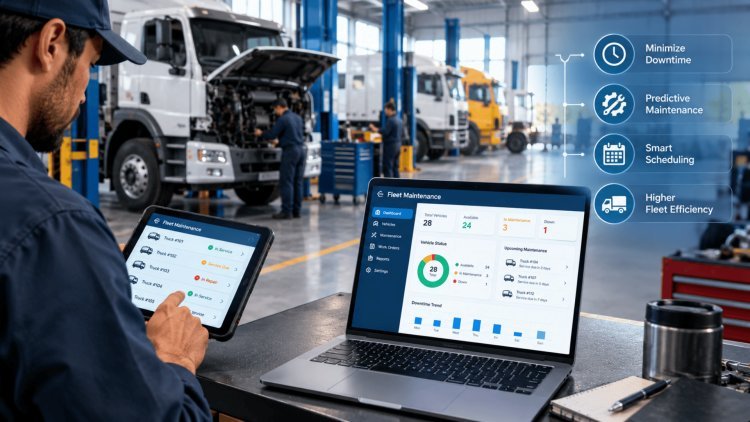
Leading fleet operations share a common trait: a centralized, role-aware maintenance dashboard that surfaces the right information to the right person at the right time. Service supervisors see upcoming PM schedules ranked by urgency. Technicians see open work orders queued by priority. Fleet managers see real-time vehicle availability.
This visibility eliminates the guesswork that turns a $200 filter replacement into a $4,000 roadside breakdown. The goal of any fleet maintenance software initiative must be to close the gap between when a problem becomes detectable and when it gets resolved—measured in minutes, not days.
Preventable breakdowns account for the majority of unplanned downtime events in commercial fleets. Closing the detection-to-resolution gap is the single highest-leverage improvement available to operations teams.
Downtime rarely starts with failure. It starts when critical maintenance information is missed, unprioritized, or unseen.
The shift from reactive to proactive fleet maintenance begins with data—specifically, the right data interpreted in real time and translated into prioritized action. Modern fleet maintenance platforms integrate telematics hardware, onboard diagnostic systems, and digital inspection workflows to create a continuous stream of vehicle health intelligence. Rather than waiting for a driver to report a problem or a service interval to expire on a calendar, the software surfaces issues before they become failures.
Digital Driver Vehicle Inspection Reports (DVIRs) are a critical complement to telematics data—capturing conditions that sensors cannot, such as body damage, tire sidewall cracking, or unusual noises reported by the operator at the start or end of a shift.
From Guesswork to Signals: Telematics, DTCs & Digital Inspections
Collecting diagnostic data and scheduling PM triggers is only half the equation. The other half—and arguably the more operationally complex half—is converting that intelligence into structured, trackable work that flows through the shop from open to closed without falling through the cracks. The most capable fleet maintenance platforms model a full “menu of operations”: a hierarchical control structure that spans issue detection, work order creation, parts allocation, labor tracking, vendor coordination, and downtime reporting in a single unified workflow.
Free shop capacity for genuinely needed repairs while extending component life cycles.
The “Menu of Operations”:
Automating Work Orders End-to-EndCondition-based triggers can reduce unnecessary preventive service events by up to 30%.
The business case for fleet maintenance software is no longer theoretical. Across public-sector fleets, commercial transportation operators, and heavy-equipment environments, organizations consistently report measurable improvements in maintenance efficiency, asset availability, compliance readiness, and operating cost control. The combination of proactive fault management, automated preventive maintenance scheduling, and structured work-order execution creates lasting operational advantages.
Reduced emergency repairs, optimized preventive maintenance scheduling, and improved parts procurement efficiency combine to generate significant annual savings.
Maintenance spending shifts from expensive reactive repairs toward planned preventive interventions, lowering overall service costs.
Centralized maintenance workflows reduce response delays and accelerate movement from fault detection to completed work order.
The greatest long-term value of fleet maintenance software extends beyond real-time alerts and preventive maintenance scheduling. Centralized maintenance records create an institutional knowledge base that improves operational decision-making over the life of every asset. Every fault code response, inspection result, service completion, warranty event, and parts replacement becomes part of a permanent, searchable maintenance history.
This historical record provides compliance teams, auditors, insurers, maintenance managers, and acquisition teams with complete visibility into asset performance, lifecycle cost trends, and maintenance effectiveness. The result is a fleet operation that is more transparent, defensible, and continuously improvable.
Every fault code, inspection failure, and driver report should generate a tracked maintenance issue automatically.
Preventive maintenance schedules should respond to actual utilization data rather than fixed calendar intervals.
Every work order should include fault origin, assigned technician, required parts, labor estimates, and resolution outcomes.
Downtime should be measured, classified, and analyzed to support MTBF studies and asset replacement forecasting.
Information must be available in real time to dispatchers, technicians, managers, compliance teams, and executives.
More vehicles remain operational and productive throughout the work cycle.
Every maintenance action is documented, searchable, and compliance-ready.
Planned maintenance reduces dependence on high-cost emergency interventions.
Faster fault detection and repair cycles keep assets in service longer.
Organizations that adopt integrated fleet maintenance platforms do more than reduce downtime. They create an operational environment built on accountability, visibility, predictive decision-making, and continuous improvement. When maintenance activities, fault diagnostics, inspections, work orders, inventory data, and asset utilization metrics operate within a single ecosystem, maintenance transitions from a reactive function into a measurable competitive advantage.
Payoff: Lower Costs, Higher Uptime & Clear Audit Trails
Annual Maintenance Savings
Maintenance Cost Reduction
Faster Issue Resolution
Centralized Records as a Strategic Asset
Core Design Principles
Automated Issue Creation
Utilization-Based PM
Work Order Context
Downtime Analytics
Role-Based Visibility
Higher Fleet Availability
Full Audit Trails
Lower Repair Costs
Reduced Downtime
Competitive Advantage Through Maintenance Intelligence
What's Your Reaction?