Building a Modern Help Desk Platform: From Reactive Support to Strategic Value
In today's fast-paced enterprise environment, internal IT and support teams are under immense pressure to do more with less — resolving issues faster, managing growing complexity, and demonstrating measurable business value. A well-architected help desk platform is the cornerstone of this transformation, converting ad-hoc, fragmented support requests into a structured, scalable, and intelligence-driven operation.

The Evolution of IT Support
The journey from a traditional break-fix model to a proactive, strategic support function represents one of the most significant shifts in modern enterprise IT. Understanding this evolution is essential to appreciating why a purpose-built help desk platform is no longer optional — it is a critical business asset.
From Reactive Firefighting To Strategic Business Enablement
How Modern IT Support Has Changed
Fragmentation Creates Operational Chaos
IT As A Business Partner
Modern organisations now expect IT to function as a strategic enabler, not merely a cost centre. This means proactively identifying recurring failure patterns, managing assets intelligently, and providing leadership with data-backed reports on support health. The shift demands a platform that captures every interaction, measures every outcome, and continuously improves through structured feedback loops.
Strategic IT Delivers More Than Issue Resolution
One Channel. One Dashboard. One Source Of Truth.
Centralising all communication into a single, transparent help desk system eliminates the chaos of fragmented requests. Every employee submits through one channel; every technician operates from one dashboard; every manager reports from one source of truth. This convergence is the foundation upon which operational excellence is built.
A purpose-built help desk platform transforms IT from a reactive support function into a measurable, transparent, and strategic business partner. Visibility improves, accountability increases, service quality becomes measurable, and continuous improvement becomes achievable.
Centralise Communication. Measure Performance. Enable The Business.
A robust help desk platform is built on three foundational pillars: a centralised ticketing engine, a role-based access model, and a clearly defined ticket lifecycle.
Core Architecture
and Workflow
Beyond basic ticketing, a truly effective help desk platform delivers a suite of advanced capabilities that drive efficiency, transparency, and accountability. These features transform the platform from a simple queue manager into a strategic operational command centre for IT and support leadership.
Data is the most underutilised asset in most IT support organisations. A modern help desk platform surfaces real-time dashboards that give managers instant visibility into critical operational metrics.
Customisable reporting allows leadership to track performance against benchmarks over time, identify peak demand periods for resource planning, and present board-level summaries that demonstrate the quantifiable business value of the IT function.
Strategic outcome: Data-backed reporting transforms IT from a cost centre narrative into a strategic partnership supported by measurable operational performance.
In regulated industries and enterprise environments, accountability is non-negotiable. Every interaction within the platform — every status change, every comment, every reassignment, every resolution note — is timestamped and stored in an immutable audit trail.
Record each ticket transition with a timestamp and responsible user.
Preserve discussion, ownership changes, and the sequence of actions.
Retain resolution notes and formal acknowledgements of the outcome.
Digital signature support for resolution sign-offs ensures that both technicians and requesters formally acknowledge the outcome, creating a defensible record for compliance audits.
Complete documentation enables teams to reconstruct the full timeline of a critical outage and identify process gaps for future prevention.
Reduce avoidable demand, use real-time data to make better decisions, and maintain a reliable record of every critical support action.
Essential Features for Operational Excellence
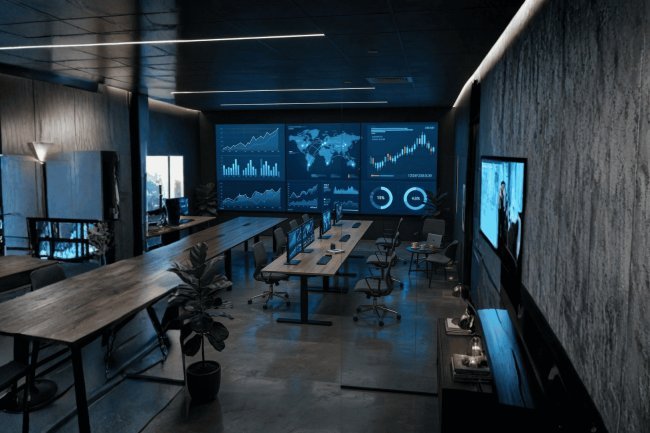
The Help Desk Control Centre
CAPABILITIESAdvanced Analytics & Real-Time Dashboards
Audit Trails, Transparency & Digital Accountability
The most forward-thinking IT and support organisations are not simply digitising their existing processes — they are reimagining what is possible when intelligent automation and artificial intelligence are embedded into every layer of the help desk platform. The future belongs to teams that build now for the capabilities they will need tomorrow.
Email-to-ticket conversion eliminates the last manual bottleneck in request intake — support emails are automatically parsed, categorised, and logged without any technician intervention. Automated status notifications keep requesters informed at every lifecycle stage, dramatically reducing "what's the status?" follow-up tickets that consume technician time without adding value. Intelligent auto-assignment routes new tickets to the best-available technician based on skill tags, current workload, and historical resolution success rates. Scheduled maintenance windows can trigger proactive communication, and recurring issues can be automatically linked to known problem records — transforming individual tickets into structured problem management workflows.
Artificial intelligence is rapidly moving from a differentiator to a baseline expectation in enterprise help desk platforms. Sentiment analysis scans ticket language in real time to flag frustrated or at-risk users, enabling supervisors to intervene before a support interaction becomes an escalation.
Detect frustrated or high-risk users before interactions escalate.
Surface tickets most likely to impact business operations.
Identify infrastructure issues before formal tickets are raised.
Resolve routine Tier-1 requests without human intervention.
A robust, intelligently designed help desk platform is far more than a tool for logging and resolving technical complaints. It is the operational backbone of a high-performing IT function — the system through which every employee's productivity is protected, every technician's effort is directed efficiently, and every leader's decisions are informed by reliable data.
The investment in a modern help desk platform is ultimately an investment in organisational productivity, employee satisfaction, and the kind of operational resilience that separates high-growth organisations from those perpetually firefighting.
The Future: Scaling for Impact
Automation Eliminates Repetition. Artificial Intelligence Enables Proactive Service. Together They Create Scalable Operational Excellence.
Automation:
Working Smarter At ScaleEliminate Manual Work Across The Ticket Lifecycle
AI & Emerging Trends
Intelligence Built Into Every Layer Of Support
Sentiment Analysis
Intelligent Prioritisation
Predictive Analytics
Conversational AI
The Help Desk As Organisational Foundation
High-ROI Outcomes From Modern Help Desk Platforms
Automate Operations. Apply Intelligence. Prevent Issues. Scale With Confidence.
What's Your Reaction?