From Click to Delivery: Transforming Order Management with Custom Software
In today's hyper-competitive marketplace, the journey from a customer placing an order to receiving their package is fraught with complexity. Custom software solutions are redefining how businesses manage this critical process — eliminating inefficiencies, connecting disparate systems, and delivering the seamless experience that modern customers demand. This presentation explores how purpose-built order management systems can revolutionise every stage of your fulfilment pipeline.
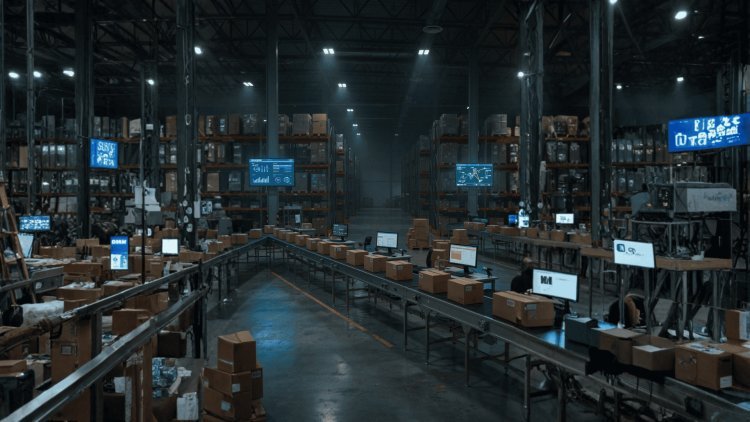
The Manual Bottleneck: Why Traditional Systems Fail
Despite advances in technology, many businesses continue to rely on legacy processes and disconnected tools to manage their order pipelines. The result is a fragile, error-prone system that struggles to keep pace with the demands of modern commerce. Understanding exactly where these systems break down is the first step towards meaningful transformation.
Manual Processes Create Errors, Silos Create Delays, And Customers Ultimately Pay The Price
Where Traditional Systems Break Down
The Hidden Cost of Manual Processing
Beyond direct errors, manual workflows are inherently slow — orders queued for human review create delays that ripple through the entire supply chain, ultimately increasing fulfilment cycle times and raising operational costs. Labour hours spent on repetitive data tasks are hours not invested in customer service, strategic planning, or business growth.
The Organisation Effectively Operates Blind
Sales teams have no visibility into stock levels, warehouse staff are unaware of priority orders, and logistics partners are working from information that may already be out of date by the time it reaches them.
Missed SLAs Create A Trust Deficit
In an era where next-day and same-day delivery are increasingly the norm, businesses clinging to manual order management are not simply inefficient — they are actively putting their customer relationships and brand reputation at risk. The cost of inaction is measured not just in operational waste, but in lost lifetime customer value.
Manual Work Creates Errors. Silos Create Delays. Customers Experience The Consequences.
Custom order management software is not a generic solution—it is engineered around the specific workflows, data structures, and operational realities of your business. Rather than forcing processes to conform to a rigid off-the-shelf product, a purpose-built system adapts to how you actually work, then elevates it with automation, integration, and real-time intelligence.
The Power of Customisation:
Bridging the Gap
The true measure of any software investment is the tangible operational improvement it delivers. Custom order management systems consistently produce measurable gains across cycle times, inventory management, and team performance — transforming the way businesses operate from the ground up.
Integrated quoting, configuration, approvals, order creation, and warehouse routing remove unnecessary handoffs and help orders move forward without waiting for manual transfers.
One of the most immediately visible benefits of custom order management software is the acceleration of the Quote-to-Order and Order-to-Ship cycles. When quoting, configuration, approval, and order creation are handled within a single integrated system, a process that once took hours — or even days — of back-and-forth communication can be completed in minutes.
Automated order routing sends confirmed orders to the warehouse immediately. Production scheduling tools prioritise jobs by due dates, material availability, and resource capacity.
Collectively, these improvements can reduce end-to-end fulfilment cycle times by 40–60%, improving the customer experience and allowing the business to handle higher order volumes without proportionally increasing headcount.
The outcome is leaner inventory with lower carrying costs, better product availability, and improved order fill rates — supporting both profitability and customer satisfaction.
Perhaps the most underappreciated benefit of custom order management software is its impact on the people who use it every day. A shared source of accurate data lets each team make decisions without relying on fragmented systems or manual updates.
Instant access to order status, shipment tracking, inventory levels, and customer history helps representatives resolve enquiries in seconds rather than minutes, and handle exceptions with confidence.
Mobile picking applications and real-time task queues help staff work more efficiently, make fewer errors, and spend less time seeking supervisory guidance.
Dashboards surface KPIs and exception reports automatically, reducing manual data gathering and allowing more time for strategic decision-making.
Empowered teams consistently outperform, and the business benefits compound over time.
Typical improvement in Quote-to-Ship timelines after implementation.
Average reduction in on-hand stock through intelligent reorder logic.
Achievable fill accuracy when manual processes are replaced with automation.
Speed improvement in resolving customer order enquiries with real-time data access.
Faster fulfilment, smarter inventory, and informed teams turn order management into a foundation for scalable business performance.
Driving Efficiency: Real-World Impact
One Connected Order Journey
Dramatic Reduction in Cycle Times
Empowered Teams with Accurate, Real-Time Data
The Impact at a Glance
Implementing custom order management software is not merely a solution to today's operational challenges — it is a strategic investment in the business's capacity to grow, compete, and build lasting customer relationships. The advantages compound over time as data accumulates, integrations deepen, and automation matures.
Every order processed by your custom system generates valuable data — purchase patterns, product preferences, seasonal demand spikes, and customer lifetime value signals. Unlike generic platforms that keep this data locked away, a custom system can surface these insights directly within your workflow. Sales teams can receive automated prompts to up-sell complementary products at the point of reorder. Marketing teams can trigger personalised campaigns based on purchase history. Leadership can model future demand scenarios with far greater accuracy. Businesses that leverage this data effectively move from reactive order processing to proactive revenue generation — a fundamental competitive shift.
Custom software is architected to integrate with third-party logistics providers, freight carriers, customs brokers, and global sales channels through API connections. New marketplace integrations can be added without rebuilding the core platform.
Ultimately, every capability described in this presentation serves a single strategic objective: the ability to deliver the right product to the right customer at the right time, every time. In an era where customer loyalty is hard-won and easily lost, consistent, reliable fulfilment is among the most powerful differentiators available to a business.
Custom order management software is not a cost centre — it is a growth engine. The businesses that invest in purpose-built systems today are building the operational infrastructure that will define their competitive position for the next decade.
The Future of Fulfilment: Scaling for Growth
Data, Integration, And Operational Consistency Create A Sustainable Competitive Advantage
Building The Foundation For Long-Term Growth
Turn Every Order Into Strategic Intelligence
Seamless Integration With Partners And Channels
On-Time Delivery As A Brand Promise
Implement → Optimise → Scale
Automate Operations. Harness Data. Deliver Consistently. Scale Without Limits.
What's Your Reaction?