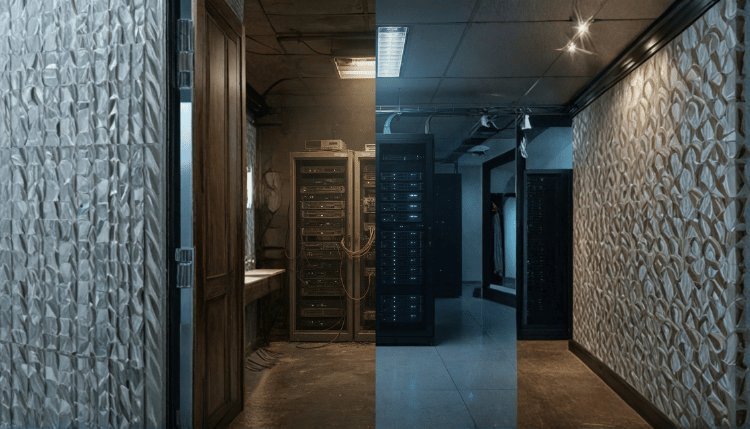
Chapter 1 • Legacy Modernization
What Is Legacy Software — And Why Does It Matter?
Legacy Doesn't Mean Old — It Means Misaligned
Legacy software is any application that no longer aligns with modern business needs, technology standards, security expectations, or operational requirements. Age alone does not make a system legacy. The real concern is whether the platform can evolve, integrate, scale, and support future business goals.
The Three Layers of Legacy
Operational Legacy
ERP, CRM, billing platforms, and core transactional systems that run critical business processes but are expensive and difficult to modernize.
Integration Legacy
Middleware, ESBs, and undocumented point-to-point integrations that connect systems while creating hidden dependencies.
Interface Legacy
Outdated user experiences, terminal screens, thick clients, and obsolete web interfaces that reduce productivity and adoption.
Common Characteristics of Legacy Systems
Deprecated or scarce-skill programming languages
Monolithic and tightly coupled architecture
Limited documentation and tribal knowledge
Poor compatibility with cloud and API ecosystems
Vendor end-of-life or unsupported platforms
Difficult to automate, test, and deploy
Why Organizations Keep Legacy Systems
01
Critical Business Logic
04
Organizational Inertia
The Hidden Cost of Legacy
Maintenance
Technical Debt
Slow Delivery
Business Risk
LEGACY
Key Takeaway
Legacy Is a Business Problem, Not Just a Technology Problem
The real risk of legacy software is not its age—it is the growing gap between what the business needs and what the system can deliver. Left unchecked, that gap increases maintenance costs, slows innovation, raises operational risk, and eventually forces modernization under crisis conditions rather than strategic planning.
Chapter 2
Warning Signs Your Application Is Outdated
Recognizing the inflection point — when maintenance costs, performance degradation, and competitive disadvantage converge — is the core diagnostic challenge for technology leaders.
01
Maintenance Consumes More Than It Creates
When your engineering team spends more than 50% of sprint capacity on bug fixes, patches, and workarounds rather than new features, the system has crossed into net-negative territory. The opportunity cost compounds daily.
02
Security Vulnerabilities Are Accumulating
Unsupported frameworks, unpatched CVEs, and hardcoded credentials are active attack surfaces, not theoretical risks. Legacy platforms also make compliance with SOC 2, HIPAA, and PCI-DSS increasingly difficult.
03
Performance Degrades Under Modern Workloads
Systems designed for 1,000 concurrent users struggle to scale to 100,000. Architectures that cannot elastically scale with cloud infrastructure create bottlenecks that directly affect customer experience and revenue.
04
Talent Pipeline Is Drying Up
New engineering graduates do not learn COBOL, PowerBuilder, or Delphi. When the average age of system maintainers approaches retirement, bus-factor risk becomes one of the most underappreciated threats in enterprise IT.
05
Integration with Modern Tools Is Impossible
If your system cannot expose REST or GraphQL APIs, cannot integrate with SaaS platforms, and requires custom middleware for every connection, it is actively blocking analytics, AI, and mobile initiatives.
06
Total Cost of Ownership Keeps Climbing
Licensing, specialized contractor rates, and the overhead of maintaining outdated hardware inflate TCO year over year without delivering corresponding gains in capability or capacity.
The Maintenance Trap
Industry research shows that organizations running legacy-dominant portfolios can spend up to 75 cents of every IT dollar on maintenance, leaving only 25 cents for innovation and new capability development.
Chapter 3: Strategic Guide
Modernization Strategies
Choosing the Right Path
Not every legacy application warrants the same treatment. A disciplined modernization strategy begins with a portfolio assessment—categorizing applications by business criticality and technical debt.
Fast Execution
When to Rehost
Ideal for data center exits or meeting hard deadlines. Delivers quick 20–30% cost savings without deep engineering.
Primary Benefit
- ✓ Immediate Infrastructure Savings
- ✓ Low Engineering Investment
- ✓ Rapid Deployment Cycle
Strategic Value
Rebuild or Replace
For mission-critical, custom apps where code is beyond salvage. Replace commodity functions with SaaS.
Primary Benefit
- ✓ Maximum Long-Term ROI
- ✓ Eliminated Technical Debt
- ✓ Business Differentiation
Strategic Alignment
Choosing the wrong path wastes budget and creates new risk; choosing the right one unlocks compounding value across your entire portfolio.
Chapters 4 & 5 • Modernization Strategy
AI-Assisted Modernization & Calculating ROI
AI Changes the Economics of Modernization
Artificial intelligence is dramatically reducing the time, cost, and risk associated with legacy modernization. Activities that once demanded months of manual effort can now be accelerated through automated analysis, documentation, testing, and code transformation capabilities.
From Legacy System to Business Value
→
AI Acceleration Layer
Modernize
→
How AI Assists Modernization
Automated Analysis
Maps dependencies, identifies dead code, and generates architecture insights across large codebases.
Code Translation
Converts legacy languages into modern platforms while reducing manual rewrite effort.
Test Generation
Produces unit and integration tests that help reduce regression risk.
Continuous Documentation
Maintains living documentation and improves knowledge transfer across teams.
The ROI Framework
Cost of Inaction
Maintenance
Security Risk
Downtime
+
Investment
Tools
Engineering
Training
→
Value Creation
Faster Delivery
Savings
Growth
ROI
Business Outcome
Modernization Creates Measurable Business Value
Successful modernization programs reduce maintenance costs, accelerate feature delivery, improve security posture, and create new revenue opportunities. Organizations that approach modernization as a strategic investment—not merely a technology upgrade—consistently achieve the strongest financial returns.
Next Steps
Real-World Results & Your Modernization Roadmap
The window to modernize on your own terms is open, but it narrows each year. Organizations that act proactively gain faster innovation cycles, lower operating costs, stronger security, and better talent retention.
01
H
Healthcare Enterprise — EHR Modernization
A regional hospital network replaced a 15-year-old Oracle Forms EHR with a cloud-native, API-first platform. The modernization reduced downtime by 94%, enabled real-time sharing across 12 facilities, and brought the organization into full HIPAA compliance.
Annual IT support costs dropped by $3.2M.
02
R
Retail Chain — Inventory Platform Rebuild
A national retailer rebuilt its COBOL-based inventory system as a microservices architecture on AWS. The new platform processes 10× peak transaction volume, integrates natively with e-commerce, and provides same-day inventory visibility across 400+ locations.
Stock availability improved by 22%.
03
F
Financial Services — Core Banking Refactor
A mid-sized bank refactored a monolithic core banking application into modular services over 18 months using an AI-assisted migration tool. The phased approach minimized disruption and delivered zero-downtime migrations.
New financial products shipped 4× faster.
Your Modernization Action Plan
Portfolio Assessment
Audit apps by criticality, debt, and value.
Strategy Selection
Choose rehost, refactor, rebuild, or replace.
Phased Execution
Deliver in sprints with clear milestones.
Continuous Optimization
Monitor, iterate, and expand improvements.
Get Started
Start with a Free Assessment
Request a no-obligation legacy portfolio audit.
Engage Our Modernization Team
Partner with engineers who specialize in enterprise-scale transformations.
Download the ROI Calculator
Build the business case and quantify the cost of inaction.
NOW
The question is no longer whether to modernize — it is how quickly you can afford to move.
Every month of delay increases cost, risk exposure, and competitive disadvantage. The time to act is now.