Building a Grant Management Platform for Funding Organizations
Funding organizations face an increasingly complex landscape — managing dozens of programs, hundreds of applicants, and millions of dollars in disbursements across overlapping cycles. A purpose-built grant management platform is no longer a luxury; it is the operational backbone that separates high-impact funders from those drowning in spreadsheets and email threads. This presentation walks through the architectural decisions, workflow strategies, and compliance requirements you need to get it right — from the first line of code to the final impact report.
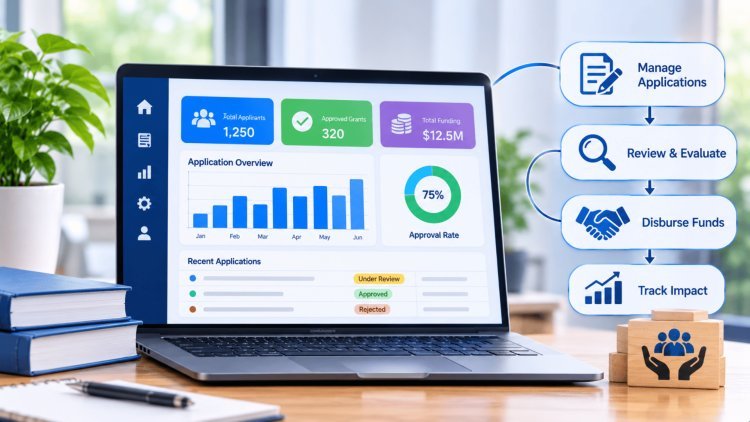
The Anatomy of a Grant Lifecycle
Most teams begin building a grant management system by designing the dashboard — a visually appealing interface that looks impressive in demos but collapses under the weight of real operational complexity. The smarter approach is to model your data hierarchy first, then build the interface around it. Every grant in your system exists within a nested hierarchy of interconnected entities, and understanding that hierarchy is the foundation of everything else.
Avoid the Dashboard Trap
Prioritizing a polished UI before locking in your data model is the most common — and most costly — mistake in grant platform development. Teams that skip the modeling phase inevitably face complex refactoring when real-world data doesn't fit the visual assumptions baked into the interface. Build the schema first; the dashboard will follow naturally.
One Persistent Record
The goal is a single, unbroken chain of data that connects a Program all the way through to a final Impact Report. Every stage — from eligibility screening to fund disbursement — should enrich the same persistent record rather than creating isolated data silos.
This continuity is what makes portfolio-level analytics possible later. Explore platform services to understand how connected architectures are designed from the ground up.
Design your data model before your UI — every entity should trace back to a parent record in the hierarchy.
Great grant management systems are built on data hierarchy first and interface second. When every Program, Funding Cycle, Application, Award, and Report remains connected, operational complexity becomes manageable and analytics become meaningful.
The pre-award phase is where most applicants form their first and most lasting impression of your organization. A clunky, confusing application portal signals institutional disorganization — even if your program team is exceptional. Investing in a thoughtful applicant experience isn't just good UX; it directly affects the quality and completeness of submissions you receive, reducing the administrative burden on your review team downstream.
Mastering the Pre-Award Phase
The grant lifecycle involves dozens of handoffs—between applicants and program staff, between reviewers and approvers, between award managers and finance teams. When these handoffs rely on manual emails, shared spreadsheets, or verbal reminders, delays compound and compliance gaps emerge. Automation is not about replacing human judgment; it is about ensuring that the system never drops a ball, misses a deadline, or loses a record.
Unified automation and tamper-evident compliance keep every grant stakeholder moving—with confidence and documentation.
Workflow Automation
and ComplianceNever drop a ball. Never miss a deadline. Never lose a record.
A grant management platform that stops at award disbursement captures only part of the story. The most effective systems connect funding decisions to measurable community outcomes, transforming operational data into strategic intelligence. Analytics should not exist merely to generate reports—it should explain impact, guide future funding decisions, and strengthen organizational accountability at every level.
Effective dashboards provide a live view of grant portfolios, funding pipelines, reporting obligations, and program performance. Different stakeholder groups require different levels of information, making role-based reporting essential.
Program officers require operational visibility into active grants, executives need strategic summaries, and board members need confidence that organizational resources are being deployed effectively and responsibly.
Monitoring fund utilization in real time provides a deeper understanding than disbursement tracking alone. Organizations gain visibility into how much funding has been allocated, how much has actually been utilized, and whether progress aligns with approved program timelines.
Early identification of underutilization, implementation delays, or budget variances allows program teams to intervene proactively and support grantees before challenges impact intended outcomes.
Impact measurement becomes meaningful when reported outcomes are tied directly back to the commitments made during the application and award process. Every reported result should be evaluated against previously approved targets and performance expectations.
Automated variance analysis enables program officers to identify achievement gaps, investigate root causes, and assess whether funded initiatives are producing the intended community benefit.
Collect application, financial, operational, and reporting data throughout the grant lifecycle.
Compare actual performance against funding commitments, timelines, and outcome targets.
Support intervention, program improvement, funding adjustments, and future grant planning.
Demonstrate measurable outcomes and build evidence for future funding decisions.
The most impactful grant management platforms do more than facilitate applications and distribute funding. They establish a continuous learning ecosystem where every application, award decision, utilization record, progress report, and outcome metric contributes to better future funding strategies. By transforming operational data into measurable evidence, organizations gain the insight required to increase effectiveness, improve equity, strengthen accountability, and maximize community impact over time.
From Data to Impact
Portfolio-Level Dashboards
Real-Time Fund Utilization
Turning Reports into Evidence of Impact
Impact Intelligence Lifecycle
Essential Analytics Components
Final Strategic Takeaway
What's Your Reaction?